Rev 1.3 (1/15/2026)
Porsche used a PCV valve on some 1.7L and 2.0L D-Jetronic engines, mostly in the 1973 and 1974 models. Early 1.7L and late (1975 and 1976) 2.0L engines did not have a PCV valve, and the crankcase breather on the oil filler was connected to the air box. In cars equipped with the PCV valve, its purpose is to regulate the flow of blow-by gasses from the crankcase into the intake manifold, where they are re-burned in the cylinders. The design of this valve is critical for proper crankcase ventilation and idle performance. From a now defunct web reference:
"During normal compression stroke, a small amount of gasses in the combustion chamber escapes past the piston. Approximately 70% of these "blow-by" gasses are unburned fuel (hydrocarbons) that can dilute and contaminate the engine oil, cause corrosion to critical parts, and contribute to sludge build up. At higher engine speeds, blow-by gasses increase crankcase pressure that can cause oil leakage from sealed engine surfaces."
"The purpose of the Positive Crankcase Ventilation (PCV) system is to remove these harmful gasses from the crankcase before damage occurs and combine them with the engine's normal incoming air/fuel charge."
The distinction here is the word "positive". When you connect the crankcase breather directly to the airbox, at idle and part load the blow-by pressure is low, and some fraction of the combustion gasses (including moisture) will condense on the surfaces, remain unburned, and contribute to oily buildup. "Positive" crankcase ventilation is where instead of the gasses being routed to the airbox, manifold vacuum is used to scavenge crankcase gasses into the manifold, with the flow being controlled by the PCV. This leads to more complete combustion of the blow-by gasses, with lower emissions, and reduced oil sludging due to moisture. Lack of a PCV in some 914's means an oil change every 3,000 miles is critical to avoid sludging.
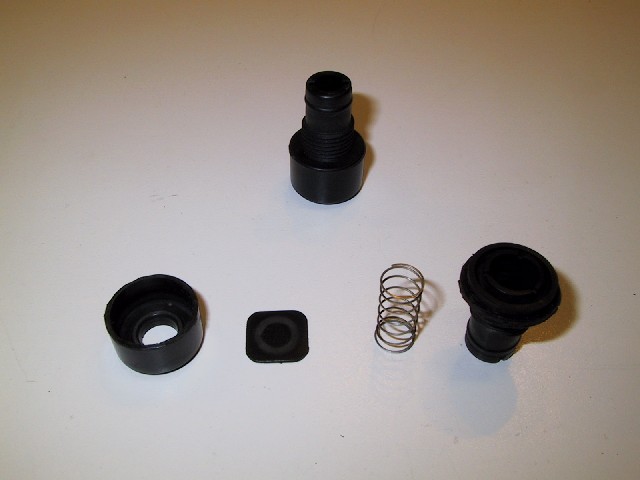
Above is a photograph of a new PCV valve and a disassembled PCV valve. The narrow portion of the new valve at the top connects to manifold vacuum, the bottom is exposed to the crankcase. When the valve is open, gasses from the crankcase flow from the bottom to the top.
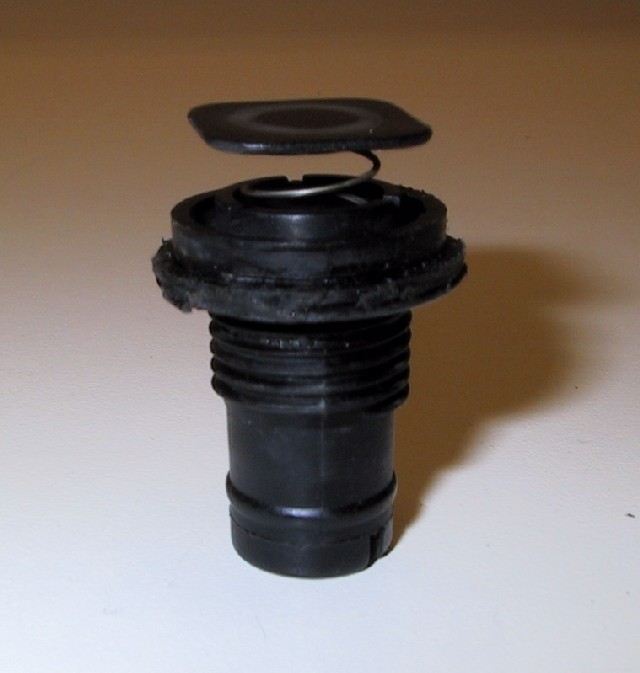
Above is a photo of the intake manifold side of the valve, with the spring inserted into the port, and the disk positioned on top of the spring. When the engine isn't running, the spring presses the disk against the valve seat on the crankcase side of the PCV valve, closing the PCV valve completely.
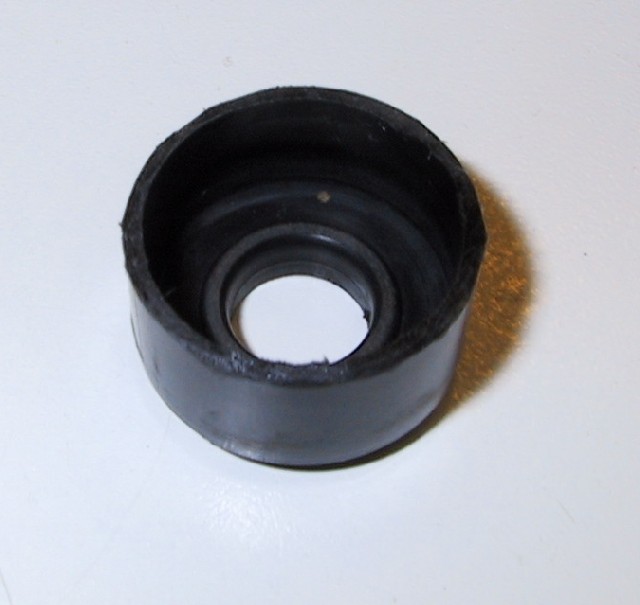
The photograph above shows the inside of the crankcase side of the valve. You can see that the circular valve seat is continuous, so that when the disk is pressed against it, there is a complete seal. In the case of a backfire, where the intake mainfold becomes pressurized, the PCV valve disk is forced against this seat, preventing the backfire from propagating into the crankcase and causing an explosion.
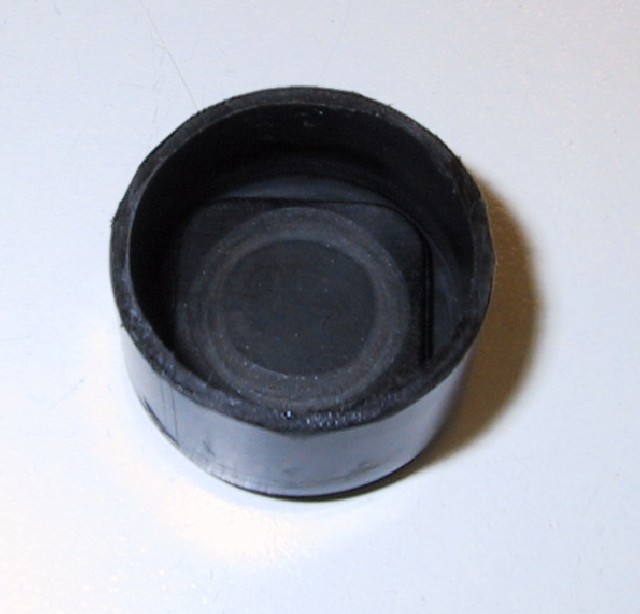
Above is a photograph of the inside of the crankcase side of the valve, with the disk in place. Note that the disk is square, so that crankcase gasses can pass around the disk when it is unseated.
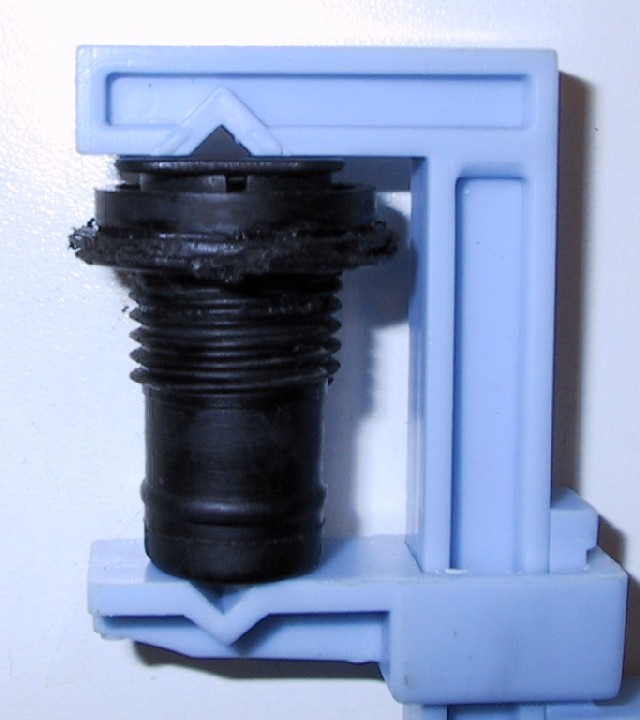
The photograph above shows the disk clamped against the manifold side seat. You can see one of the three metering slots on the seat that permit a regulated flow of gasses through the valve when it is in this position. When the pressure differential across the valve is high (virtually any time the engine is running), the disk is pulled up against this seat. The metering slots limit the flow crankcase vapors into the intake manifold.
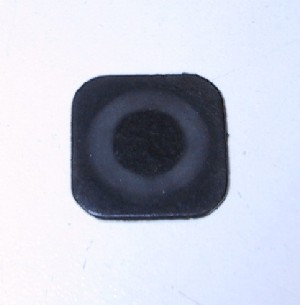
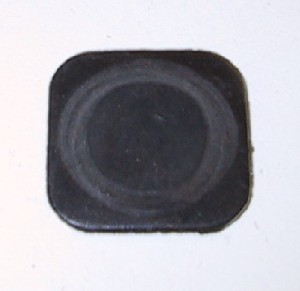
Above are photographs of each side of the disk. The photo on left shows the side of the disk that contacts the crankcase side seat, the photo on the right shows the side that contacts the intake manifold side seat. Note the mark from the spring on the intake manifold side.
The crankcase is ventilated by a system that supplies fresh clean air from the airbox to the flashback arrestor. Ports in each head are connected to the flashback arrestor. Air flows through the heads, down the pushrod tubes, and into the crankcase. The flashback arrestor prevents a flame front from the air box (e.g. due to a backfire) from propagating into the crankcase, where it could ignite the crankcase vapors and cause an engine explosion.
This mode corresponds to the idle condition. The pressure differential presses the disk against the intake manifold side seat, where the metering slots permit a regulated flow of gasses into the intake manifold.
This mode corresponds to over-run (coasting in gear declutched, with the throttle closed). In over-run, manifold vacuum can exceed 20 in. Hg in 914's lacking a vacuum limiter valve. In cars with a vacuum limiter valve, The intake manifold vacuum is limited to the setpoint, at around 18 in Hg. The pressure differential presses the disk against the intake manifold seat, where the metering slots permit a regulated flow of gasses into the intake manifold. Blow-by is minimal as combustion is at a low level.
This mode corresponds to part-load conditions. Crankcase pressure is positive and moderate. The pressure differential presses the disk against the intake manifold side seat, where the metering slots permit a regulated flow of gasses into the intake manifold.
This mode corresponds to heavy load and full-load conditions. When the manifold vaccum approaches atmospheric pressure and the crankcase pressure increases, the disc is pushed away from the intake manifold seat by the spring, and the valve opens and permits a large flow of blow-by to enter the intake manifold and be combusted. The spring is not strong enough to overcome the blow-by pressure and close the valve by pressing the disc against the crankcase seat. If the blow-by volume exceeds the maximum flow rate of the PCV to the point where pressure from the crankcase overcomes the force from the spring, and the disk is pushed on to the metering seat, any excess blow-by then flows back through the crankcase fresh air intake system to the air cleaner box, through the throttle body and into the cylinders.
This mode corresponds to an intake backfire condition. Here, the high positive pressure in the manifold presses the disk tightly against the crankcase side seat, sealing the PCV valve and preventing flame propagation into the crankcase to prevent an explosion.
Modern PCV valves use a shaped plunger instead of a disk valve. The plunger's shape is so that a smooth transition in flow from metered to full flow occurs when the pressure differential changes. This design permits a large flow through the PCV valve when intake manifold vacuum is low (heavy or full-load), while restricting flow when intake manifold vacuum is high (idle and overrun). It also provides backfire protection.
In an effort to improve idle stability while still maintaining a PCV system, I will be investigating several modifications:
I tried #1 out. Eliminating the PCV did not improve idle stability. The "idle hanging" problems I noted were strongly affected by mixture - rich idle mixture caused more hanging, lean eliminated it. The vast majority of my idle stability problems were (and still are) traceable to load variations on the engine due to the alternator/regulator action. I'm debugging my system and hope to get to the root of the problem - stay tuned! Eventually, I'd still like to try #2.
The PCV valve should be removed at every oil service, inspected, and cleaned with contact cleaner spray. While there is no recommended service interval from Porsche, the accepted practice is that PCV valves should be replaced every 20K miles. The PCV valve part number is 022 115 542, but it is NLA. Your best bet is classifieds and eBay.